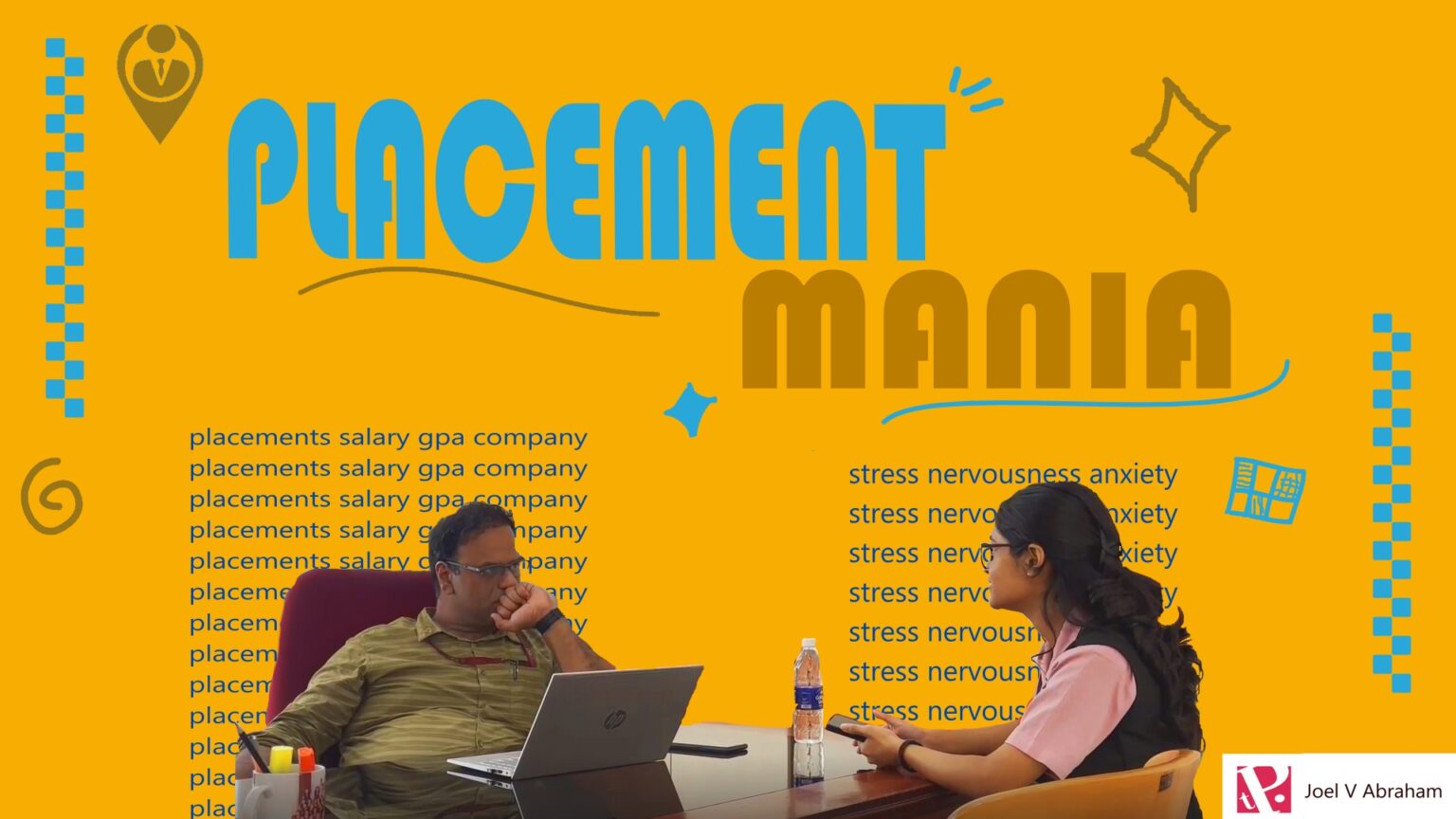


As the month of May comes around, our thoughts move past the worries of academic life toward its sweeter reward—summer break. However, at Rajagiri School of Engineering and Technology, May also celebrates an important milestone: the graduation of our undergraduate and postgraduate students. These students have reached the pinnacle of their academic journey, surpassing countless challenges along the way—assignments, overdue records, exams, and deadlines. But during their four years here, placements stood out as the most stressful yet awaited phase.
Thushar Krishna, a Mechanical Engineering student, was initially allotted to work at an electronics firm known as Kaynes. However, since the role he received was that of an Executive Sales Manager, which did not align with his core branch, he chose to join Digitra, a company focused on mechanical and civil engineering. Being part of the student council, Thushar says, “In my first interview, they asked more about my leadership qualities than my projects, so my advice to students is to join clubs.”
On the other hand, AD student Sujin’s journey to getting placed at IBM was largely centered on his confidence and communication skills, as well as basic coding. “It’s all about projects; 70–80% of the interview is based on project-based topics,” says Sujin. The process entails tests on coding, language, and typing. Endless rounds of testing end with an interview round for securing the placement.
CS student Geevarghese’s preparation started during his second year. While everyone was busy deciding between minors and honors, he had decided on choosing what he wanted to learn. “I started working on things I knew I wanted to learn,” he recalls. He stresses the importance of a solid base in academics, while also being able to learn more beyond the classroom. “You need to work on yourself. Learn more courses, and reach out to a lot of people.”
While describing her placement process, Sandra Anna Priyan, also a CS major, focuses on the importance of confidence: “You must have confidence. Because no matter how much we say, we should say it with confidence.” From the faculty’s side, Anand Sir expresses joy on this year’s placement rates.
CS as well as non-CS branches have seen a good increase in placements. “Students should focus on their fundamentals, as well as have good communication skills,” Anand Sir advises. Articulating your ideas is as important as coming up with them. He also advises students to focus on being able to solve problems, and not just coding.
When it comes to interviews and aptitude tests, placement advisor Manu Sir believes in a simple, foolproof philosophy—prepare consistently, communicate efficiently, and stay agile. “From the day you set foot in Rajagiri, set a goal and strive to achieve it,” he encourages. “Start small with simple courses and increase the difficulty as you improve. Consistency in academics is key to maintaining a strong CGPA, which is pivotal during the shortlisting process.”
He also emphasizes the importance of effective communication during interviews, as it reflects one’s ability to engage with coworkers. Communication should be clear, not merely eloquent. Most importantly, students must be adaptable and willing to learn new technologies. “In the age of AI, many jobs have become obsolete, but with it has also come an influx of new roles,” he says. It is essential to stay ahead of the curve and understand how to work with AI rather than against it.
Reno, an S8 Computer Science student placed at RedBlack Software, emphasizes the importance of straightforward answers that detail the technical aspects of a project and urges students to avoid exaggerating about their technical proficiency. “Focus on explaining what you do know clearly and in detail,” he says.
Reducing placements to a battle of technical competence misses the bigger picture. In the words of Tona, a final-year EEE student, soft skills played a disproportionately large role in securing placements. She put this belief into practice by pursuing an internship focused solely on soft skills, emphasizing that success is not just about technical proficiency, but the ability to effectively communicate one’s strengths. Even the strongest skills can go unnoticed without proper articulation.
Projects, too, proved just as important, if not more so. With the minimum CGPA for placement calls typically set at 7.5 and above, grades alone did little to distinguish candidates, pushing students to strengthen their profiles through projects and other achievements.
A clear divide emerged in how Tona and Sandra, a student from the CS department approached skill-building. Tona favored specialization, repeatedly stressing the importance of excelling in a single domain rather than spreading oneself too thin. Sandra, however, advocated for versatility, stating, “They definitely need more all-rounders, and good people in general; companies have a thorough look at everything.”
Despite these differing perspectives, both shared a similar attitude toward their peers’ success. Tona spoke of genuinely celebrating her friends’ offers. Sandra echoed this, describing a placement culture built on mutual support, constructive criticism, and shared growth. Final-year Mechanical and ECE students opened up about their placement journeys, spotlighting how confidence, communication, and real-world skills make all the difference.
Aadith, from Mechanical, nailed his interview despite last-minute registration and feeling underprepared. His project on bioethanol extraction and blending from agricultural waste became a key discussion point. He also noted that specialized people are more in demand than “jacks of all trades,” adding humorously, “I don’t know anything and I got placed.”
Athira Ajay, from ECE, landed a position at Ignitarium with a package of around 5.5 LPA. She stressed solid fundamentals, VLSI prep, AI exposure, and clear communication. Recalling her placement confirmation, she said, “I was on cloud nine.”
Blaze Antony, from Mechanical, snagged two offers, pointing to fluency, poise, and sharp speaking in interviews and group discussions. “Stay calm in technical talks,” he shared, “and you’ll leave recruiters impressed.” These stories show prep and personality go hand in hand.
Based on the various individual experiences mentioned above, it is evident that placement is one of the most challenging and stressful processes in the whole education cycle. Placement is the fruit of years of effort and learning acquired at the beginning stages of one’s life. For some individuals, it might prove to be a sweet experience, whereas for others, it might prove to be bitter. For those fortunate enough to have been placed, they can finally taste the rewards of their successes, while we, as students, nurture our abilities in pursuit of the same joyous ending.